Forum hosted by AFD, 06/05/2026.
Step By Steppe had the pleasure of participating on May 06, 2026, in the Forum organized by the AFD Group (AFD, Proparco, and Expertise France). They hosted a high-level forum to address the unprecedented demand for critical minerals—lithium, cobalt, and rare earths—essential for the global net-zero path.
As a strategy firm at the intersection of energy and industry, we’ve synthesized the key operational shifts discussed during the event:
1. Context and Challenges of the "Mid-Transition"
The acceleration of the low-carbon transition is placing unprecedented pressure on mineral resources (lithium, cobalt, nickel, rare earths). We are currently in a "mid-transition" phase, characterized by high uncertainty: the steady decline in renewable energy costs coexists with the persistence of fossil-fuel-based economies and increasing geo-economic fragmentation.
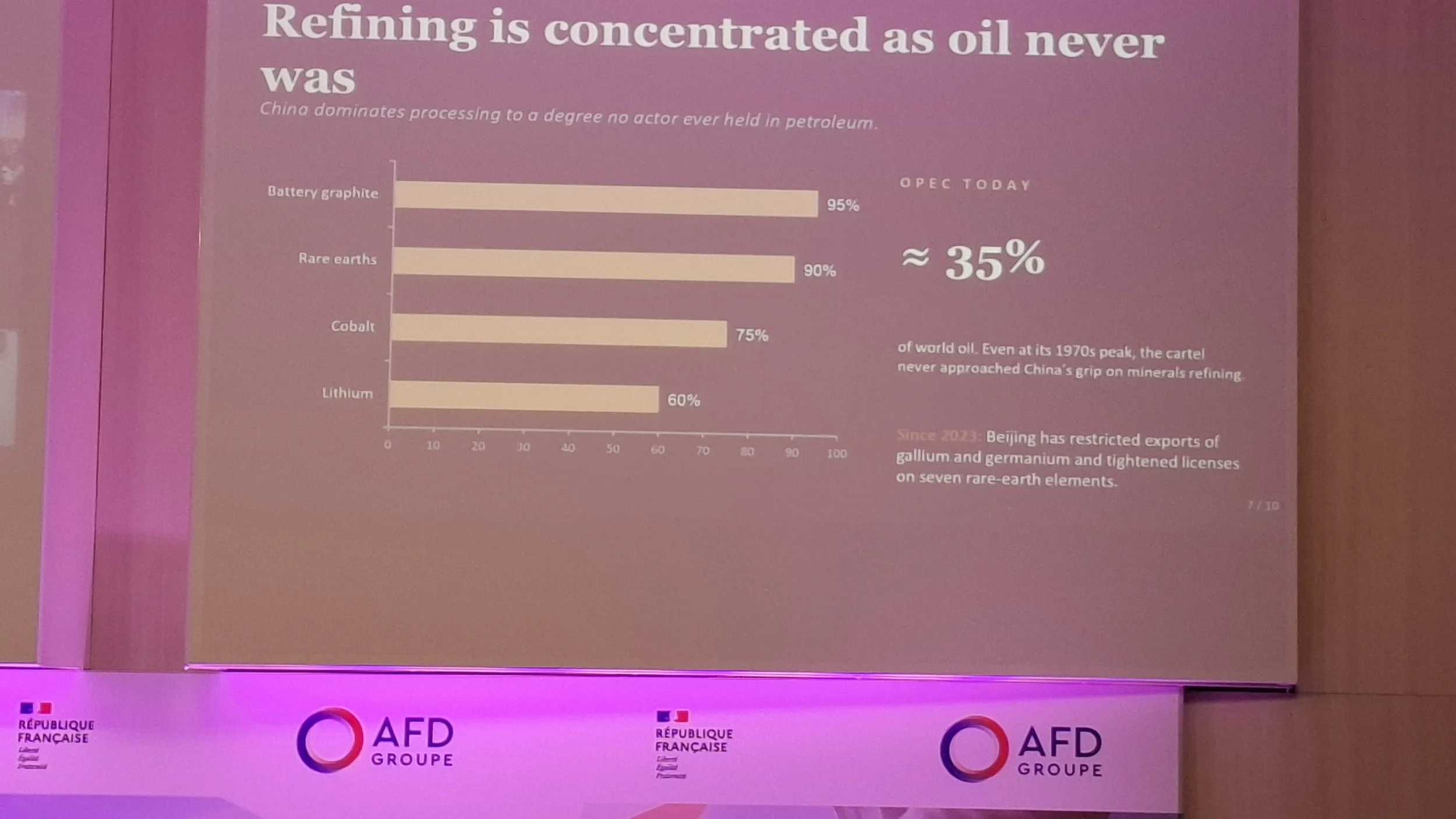
Risks for Europe: Strategic dependence (China controls 90% of certain technologies), price volatility, and supply chain instability.
Risks for Producing Countries: The threat of a "Resource Curse v2.0," fiscal vulnerability to market volatility, and environmental (water stress) and social pressures (rights of indigenous communities).
2. Diagnosed Challenges: Uncertainties and Asymmetries
Experts from the IEA, OECD, and CNRS highlighted several major obstacles to a stable supply management:
Geographic Concentration: Supply concentration is sometimes higher than that of OPEC (e.g., the DRC accounts for 70% of global cobalt).
Technological Uncertainty: The rapid pace of innovation (new battery chemistries) makes long-term planning perilous for investors.
Coordination Deficit: The lack of shared macroeconomic scenarios between the Ministries of Finance in producing countries and European institutions hinders the alignment of public policies.
3. Financing Strategies and the Role of Development Banks
To unlock private capital, institutions such as the AFD Group, the World Bank, the EBRD, and Bpifrance advocate for a shift in the financial paradigm:
Financial Engineering: Utilizing blended finance, risk-sharing guarantees, and off-take agreements (pre-purchase) to secure investments.
Infrastructure Support: Public Development Banks (PDBs) must invest not only in mines but also in transport corridors, energy, and water access.
Strategic Selectivity: Prioritizing projects that meet the strictest ESG (Environmental, Social, Governance) standards to ensure social license to operate and long-term viability.
4. European Ambitions and Industrial Sovereignty
The European Commission (via the Critical Raw Materials Act) and DIAMMS (France) have set clear targets for 2030:
Internal Capacities: 10% extraction, 40% processing/refining, and 25% recycling carried out on European soil.
Concrete Examples: Eramet’s geothermal lithium project in Alsace and Carester’s magnet recycling plant illustrate the drive to master the entire value chain.
Purchasing Policy: The need for European industrialists to organize into purchasing groups to stabilize demand against global suppliers.
5. Toward a Balanced Partnership with the Global South
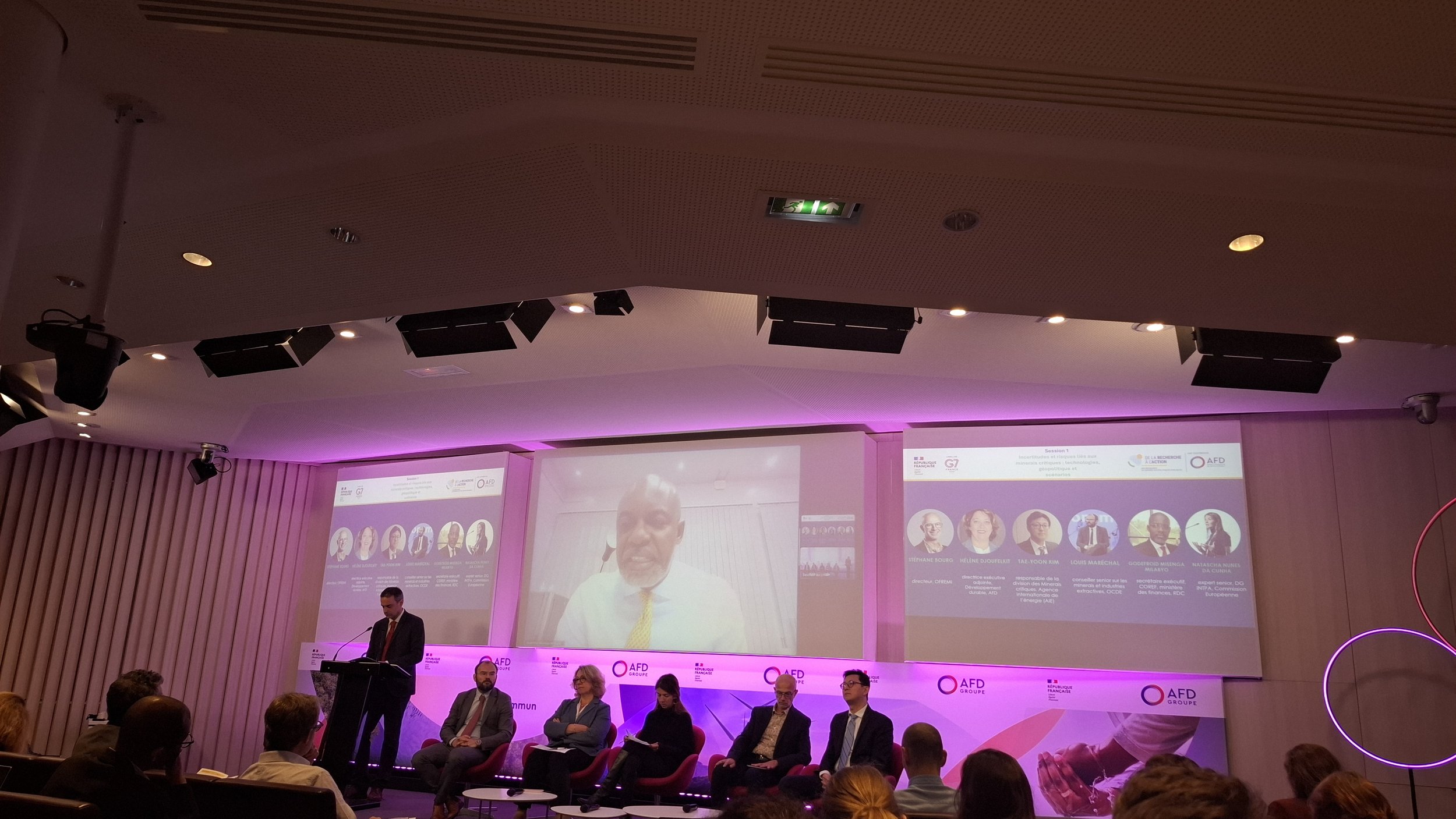
M. Godefroid Misenga Milabyo, Executive Secretary, COREF, Ministry of Finance, DRC
Dialogue between IDDRI, NRGI, and ministerial representatives (Bolivia, DRC) emphasizes the urgency of moving beyond a purely transactional logic:
Value Chain Integration: Producing countries demand local industrialization (refining, processing) and refuse to remain mere "raw material reservoirs."
Transparency and Governance: Institutional support for anti-corruption efforts and the optimization of mining taxation.
Regional Approach: Encouraging cooperation between producing countries (e.g., Southern Africa, Latin America) to gain leverage in global negotiations and harmonize standards.
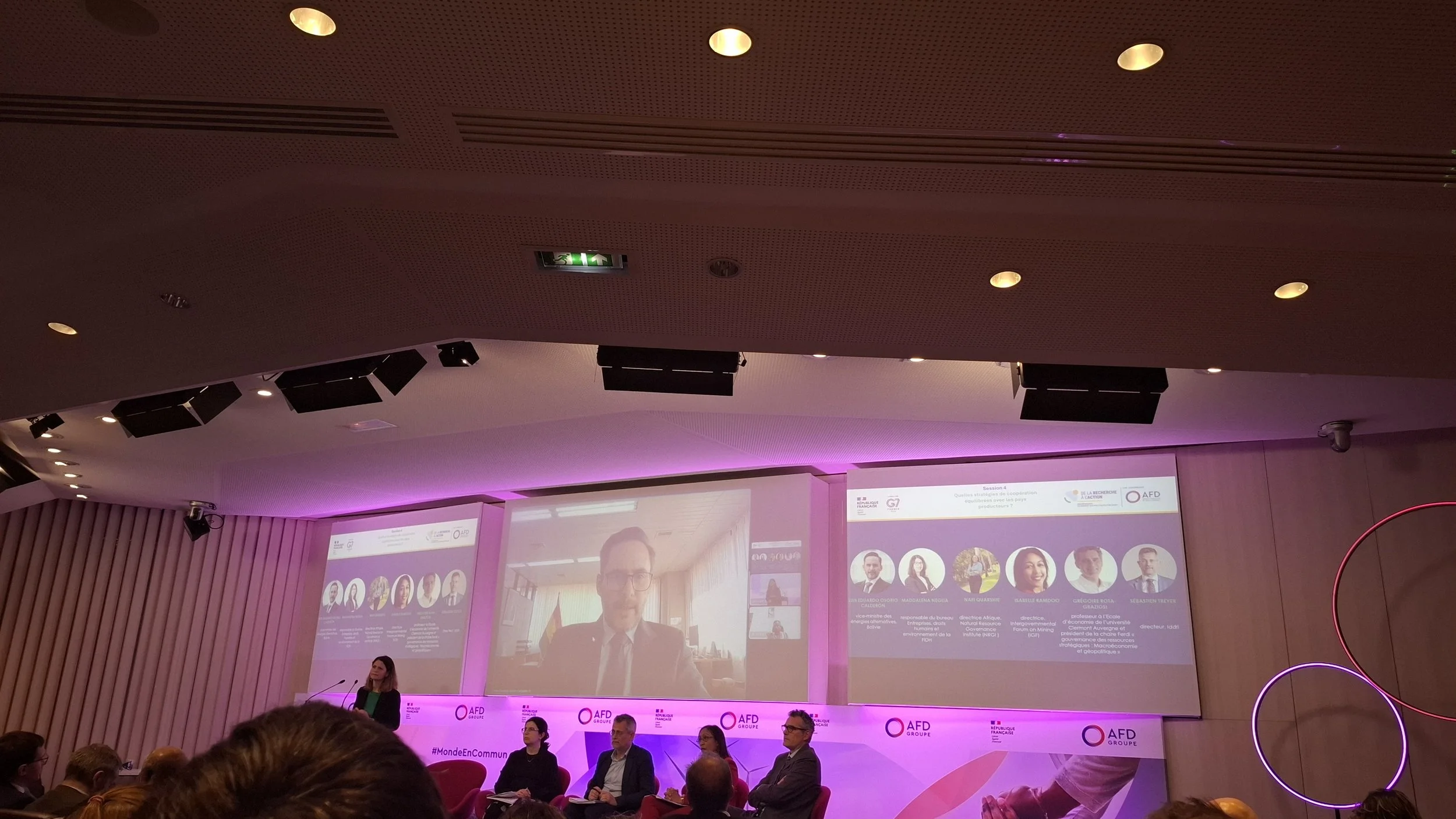
M. Luis Eduardo Osorio Calderon, Vice Minister of Alternative Energies, Bolivia
Conclusion and Outlook (G7)
In view of the French G7 Presidency, this conference calls for total transparency regarding the origin of metals and the creation of benefit-sharing platforms. The goal is to transform the constraint of critical minerals into a lever for sustainable development and climate resilience for both developed economies and the Global South.